Understand your core. Evolve it without fear.
Tweezr maps your legacy estate, from mainframe COBOL to Java and .NET, into a deterministic, cited model, so your team and your AI agents can change it safely.
Forty years of logic. Nobody left who wrote it.
Apps call Java and .NET services, services call the mainframe, programs touch tables, and business rules live somewhere in between. No document captures how it all connects.
“They didn't put any commentary into the code, and now they're gone. We don't know what it does anymore.”
We don't guess. We determine.
Tweezr reads all of it.
One deterministic map of your entire core.
Every app, service, program, job, table and business rule, across mainframe, Java and .NET, connected and verified. Not a guess from a model: every answer is traced to the exact file, line and field.
Change one thing. See exactly where it lands.
Tweezr reads each program's control flow and data lineage, then follows a change across systems to every place it lands. Pick a stack.
Illustrative sample estate. Names and line numbers are examples.
Your AI agents, on solid ground.
Claude Code, GitHub Copilot and OpenAI Codex stay grounded in the Tweezr map through MCP. On top, Tweezr Factory brings an agentic development lifecycle to legacy systems.
Tweezr Factory Your agents' own tooling
- Context. The deterministic map of your estate, cited to the line.
- Messaging. Prompts and hand-offs between agents.
- Skills. Legacy-aware skills and processes for each task.
- Agentic loops & execution. The agent writes and runs the change.
- Validation. Tests and legacy emulation prove the change before release.
See it live
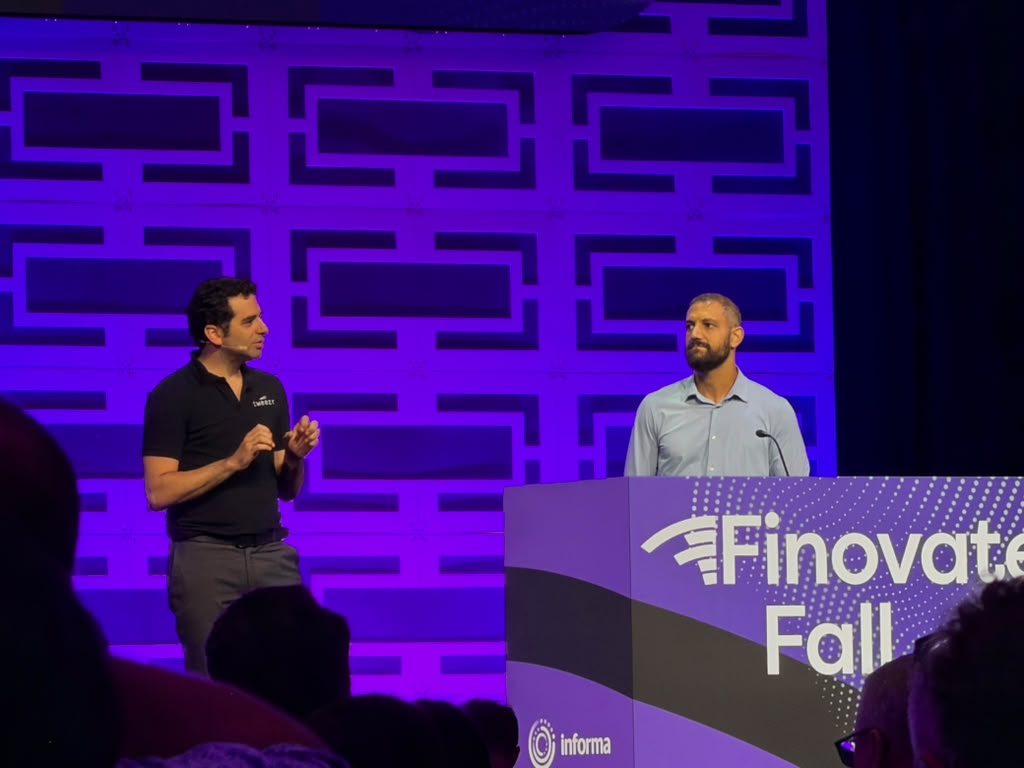
Best of Show at FinovateFall 2026.
Seven minutes on stage in New York: Tweezr mapping a real legacy estate and tracing a change end to end, live.
Technology coverage
The mainframe, and everything legacy around it.
From COBOL to Java and .NET, one platform that maps your full estate, end to end.
Legacy platforms
Where the legacy lands
Cross-platform
Mainframe · z/OS
The mainframe, fully mapped
IBM z-Series, the heart of most banking back-offices. Full coverage across TP monitors, batch languages, data and screen layers. Every program, copybook and queue resolved into one navigable graph.
TP / online monitors
- CICS
- IMS-TM
Batch languages
- COBOL
- PL/I
- Assembler
- JCL
Data
- VSAM
- DB2 z/OS
- IMS-DB
- Sequential files
Schema / screens
- Copybook
- DCLGEN
- BMS
- MFS
Midrange · IBM i (AS/400)
A distinct ecosystem, often missed
Its own languages, schema and database, frequently lumped together with z/OS by tools that should know better. Full coverage of the RPG calling graph, the DDS schema layer and the LANSA 4GL on top.
Native IBM i
- RPG
- CL
- DDS
- DB2 for i
LANSA (4GL on IBM i)
- LANSA
- .rdml
- .rdmlx
Non-IBM mainframe & integration · Other heritage platforms
The ecosystems the field forgets
Each with its own DSL, datastore and conventions. Full on Adabas/Natural and TIBCO; on-demand on the rest, calibrated per engagement.
Adabas / Natural (Software AG / Mosaic)
- Natural
- Adabas
TIBCO BusinessWorks (BW5 → BW6 / BWCE migration)
- BW5
- BW6
- BWCE
- .process
- XSD
- WSDL
CA / Broadcom mainframeOn-demand
- IDMS
- Datacom/DB
- Easytrieve
- CA Gen
Unisys MCP / OS 2200On-demand
- DMSII
- ALGOL
- COBOL-74/85
Tandem / NonStop (HPE)On-demand
- TAL
- NonStop SQL
- Enscribe
Banking cores · Third-party cores
The cores nobody wants to touch On-demand
Vendor cores with their own DSLs, customisation layers and parameter trees. We cover several under existing customer engagements, with specifics kept confidential out of respect for those agreements.
Rehost target · Unix / Linux
Where mainframe transactions move first
CICS COBOL doesn't have to retire to leave z/OS. IBM TXSeries brings full CICS semantics to AIX and Linux, and we trace the lineage straight through the rehost boundary, call graph intact.
Operating systems
- AIX
- Solaris
- HP-UX
- RHEL
- SUSE
- Ubuntu
Transaction monitor (CICS on distributed Unix/Linux)
- IBM TXSeries
Build / runtime
- C/C++
- Bash
- Make
- GCC
Modern target · Containers & orchestration
The deployment substrate everything lands on
Mainframe transactions don't end on the metal. They're packaged into containers, frequently TXSeries on RHEL pods, and orchestrated alongside cloud-native services. Coverage runs straight through.
Container runtimes
- Docker
- Podman
- containerd
Orchestration
- Kubernetes
- OpenShift
CI / deploymentOn-demand
- Helm
- ArgoCD
- GitOps
Languages · Modern legacy
“Modern” only by mainframe standards
Java, .NET and PL/SQL are the new legacy: decades of accumulated complexity, opaque calling chains, and the stacks every modernisation programme eventually lands on. We follow lineage all the way through.
Languages we trace into
- Java
- .NET (C#)
- C++
- Python
- PL/SQL
Modernisation runtimes (The bridges between mainframe COBOL and JVM/.NET workloads)On-demand
- Micro Focus / OpenText Enterprise Server
- AWS Mainframe Modernization
- Heirloom
Estate-wide · Tooling that runs the estate
And the tooling that runs the estate
The cross-platform plumbing, not bound to any single platform, running alongside everything above. IBM MQ in full; the rest on-demand per engagement.
Schedulers / workload automationOn-demand
- CA-7
- Control-M
- IBM TWS
- Autosys
Change managementOn-demand
- Endevor
- Changeman ZMF
- SCLM
Messaging
- IBM MQ
Managed file transferOn-demand
- Connect:Direct
- CA XCOM
Security & data classificationOn-demand
- RACF
- ACF2
- Top Secret
Don't see your stack? Tell us what you run
Measured on real banking cores.
Numbers from pilots and engagements with banks running legacy estatesLegacy estates we mapMainframe: COBOL, PL/I, JCL, CICS, IMS
IBM i: RPG, CL, LANSA
Adabas / Natural, TIBCO
Java and .NET services
DB2, VSAM, Oracle, SQL Server.
Time saved
On system-analyst SDLC tasks: feature design, reverse-engineering and incident resolution.
- 2 weeks
From pilot to the first answer you can trust.
- 50%
Projected off a critical overnight batch job at a tier-1 bank, about an hour a night.
- 2 mo → 1 wk
Of implementation effort. Tweezr writes the code and tests, via MCP.
- <30 min
To onboard a developer through a natural language interface.
- 100%
Of answers cited to the exact program, paragraph and field.
“No, no, no. Unequivocally no. We would have had to put a lot of people on it, just to start thinking about what to look for in the code and what the problem might be. There is no comparison.”
Working alongside the platforms banks already rely on.


The IBM Technology Partner mark is a trademark of International Business Machines Corporation, registered in many jurisdictions worldwide.
Member of the Banking Industry Architecture Network (BIAN)
In the press
What others are saying.
- Forrester12 February 2026FinovateEurope 2026: From AI Hype To Bank-Ready ExecutionForrester's Aurelie L'Hostis on the legacy modernization demos that explain, map and evolve the core, naming Tweezr a Best of Show winner for the second year running.Read article
- 10x Banking17 June 2026The legacy comprehension problem: how AI changes core banking migrationOhad Kotler with 10x Banking at Money20/20 Europe: Tweezr maps the legacy system, 10x is the modern core.Read article
- Finovate28 October 2026Banks Win by Helping Customers Navigate the Financial WorldFinovate's newsletter on its Best of Show winners, including Tweezr and Ohad Kotler on the Finovate Podcast.Read article
- Business Insider28 October 2026Deutschlands letzte große Chance im KI-Rennen?Germany's last big chance in the AI race: investors on where Europe can still win. In German.Read article
Security
On-prem, or SaaS hosted by Tweezr.
Run Tweezr on IBM Z, on LinuxONE or in your own environment, and your code, your data and your customers' data stay inside the bank. Or use Tweezr as SaaS, with no infrastructure to stand up.
- Zero
Customer data or PII exposure on-prem.
- 1 to 4 weeks
To deploy on-prem.
- SaaS
Hosted by Tweezr. Nothing to install.
- IBM Z
Listed in IBM's ISV solutions catalog for IBM Z. Tweezr on IBM Z
Questions banks ask us first.
Grounding, deployment, languages and time to results.
How is Tweezr different from GitHub Copilot or Claude Code?
Unlike general-purpose AI coding assistants, Tweezr uses a proprietary codebase investigator to establish a deterministic blueprint of legacy code. This grounds any work done with AI in facts and complete system-wide and integration-wide accuracy, not probabilistic guesses.
Read the full comparisonCan Tweezr connect via MCP to my co-pilot?
Yes. Tweezr exposes its deterministic codebase blueprint over the Model Context Protocol (MCP), so your existing AI assistant (Claude Code, Cursor, GitHub Copilot, or any MCP-compatible client) can query Tweezr's grounded analysis directly. Your developers keep the tools they prefer, while every suggestion is anchored in Tweezr's verified, system-wide facts.
Which legacy languages does Tweezr understand?
Tweezr's codebase investigator and specialized AI are fluent in COBOL, RPG, and Adabas & Natural, as well as all modern languages. The platform is specifically designed for the mainframe-era languages that power global banking.
How does deployment work?
Tweezr operates fully on-premise within your bank's landing zone. The deterministic preprocessing happens on a single machine with no external connectivity required. Zero customer data or PII ever leaves your environment.
Can it run on my mainframe?
Yes. Tweezr is available on and supported on IBM LinuxONE and Linux on IBM Z. The full platform (ingestion, static analysis, the dependency graph, and local model inference) runs as a native s390x build on the machine you already operate. Not emulation, and not a client calling back to a cloud service. Inference runs locally on IFLs alongside everything else, so there is no metered endpoint and no outbound calls to external services.
Tweezr on IBM ZWhat does the onboarding process look like?
We follow a three-step process: (1) A Discovery Demo where we show the engine on real or sample code, (2) a Targeted POC against a high-priority project in your pipeline, and (3) full-estate rollout. Most organizations see value within the first demo session.
What types of use cases does Tweezr support?
Tweezr supports four primary value propositions: safe legacy change and maintenance, modernization planning and safe migration design, third-party reverse engineering, and data lineage with legacy reporting. All powered by the same deterministic foundation.
How long does it take to see results?
Developer onboarding takes less than 30 minutes via our natural language interface. Process archaeology that previously took a week can be completed in under 45 minutes. Root cause analysis for incidents takes less than 10 minutes.
See Tweezr on your own code.
A pilot on your stack, with first answers you can trust in two weeks.